Containerised Vehicle Shipping from China
One to four vehicles per container, racked or floor-loaded, secured to carrier-accepted standards. The sealed-box option: the vehicle is not driven during transit and does not sit on an open deck.
20GP · 40HQ · 40FR · 40OTRack loading up to 4 unitsSealed and secure
Loading
Loading Operations


Lashing
Lashing and Securing Standards
A vehicle that shifts in transit results in a total loss claim. Securing follows carrier- and insurer-approved methods — not improvised solutions.
First-person view: vehicle container loading, lashing and sealing at the yard.

- Steel strapping over the tyres or through the wheel hubs to floor anchorage points
- Hardwood chocks nailed and glued in front of and behind each wheel
- Dunnage bags or timber bracing to stop lateral movement
- Rack systems bolted to the container floor where two or more cars are stacked
- Battery terminal isolated where required by the carrier
- Fuel reduced to the level the carrier specifies, tank cap sealed
What you receive
- Photographs before loading, showing body condition
- Photographs of the lashing and chocking in place
- Container number, seal number and VIN recorded on the packing list
- Loaded weight confirmation for the bill of lading
Capacity
Container Capacity by Equipment Type
| Equipment | Internal dimensions (approx.) | Typical car load | Notes |
|---|---|---|---|
| 20ft standard (20GP) | 5.90 × 2.35 × 2.39 m | 1 car, or 2 small cars on a rack | Single large SUV or pickup usually fills a 20ft |
| 40ft high-cube (40HQ) | 12.03 × 2.35 × 2.69 m | 2–4 cars depending on size | Rack systems allow 3–4 sedans; 2 large SUVs or pickups |
| 40ft flat rack (40FR) | No side walls or roof | 1 oversize vehicle or machine | For out-of-gauge height or width; lashing plan required |
| 40ft open top (40OT) | Open roof, tarpaulin cover | 1 tall vehicle, crane loaded | For cargo too tall to load through the door |
These are typical figures. Real capacity depends on the exact vehicle: wheelbase, height, mirrors and roof racks all matter. We measure the unit before confirming the plan.
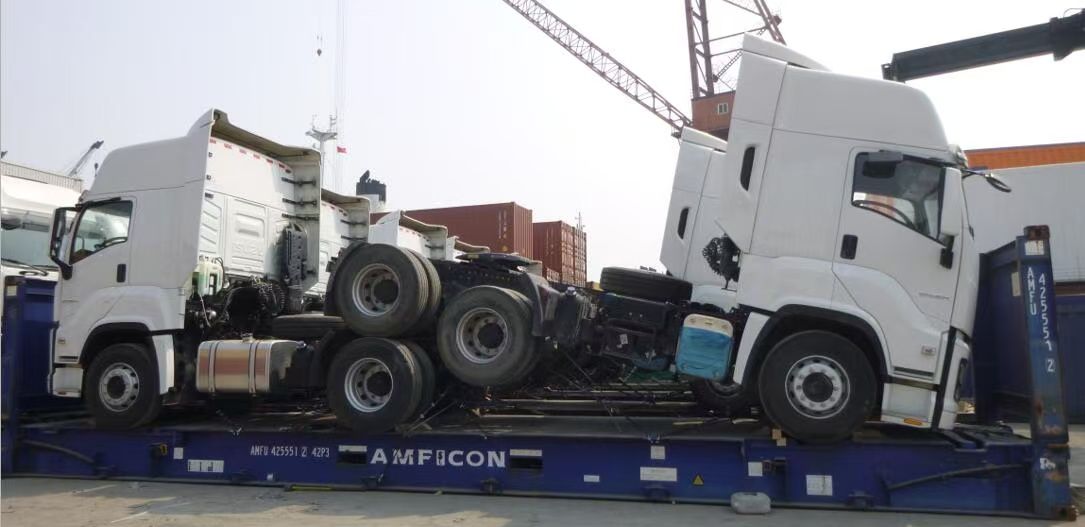
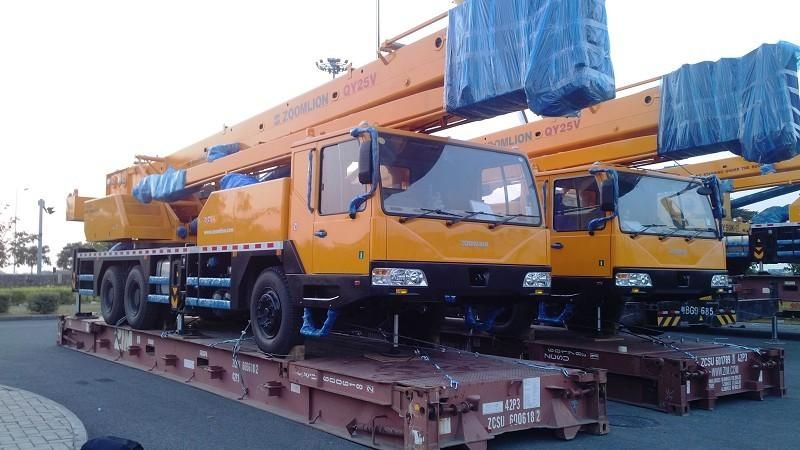
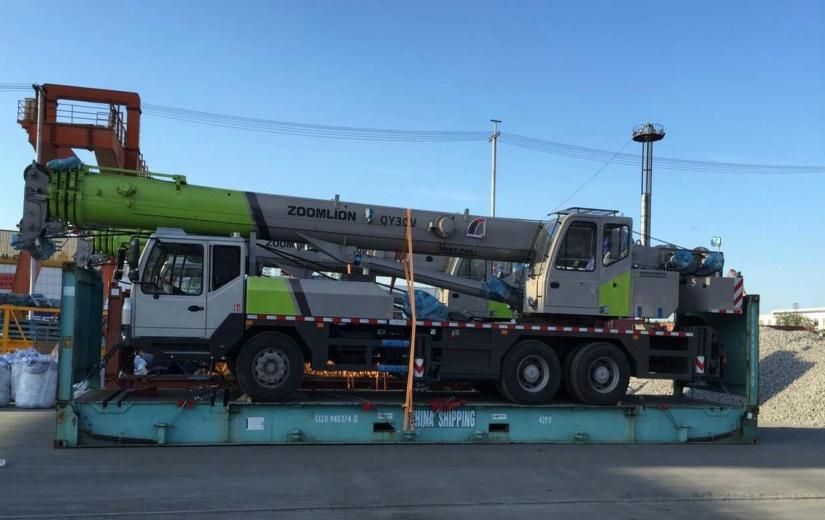
Flat rack in practice
Flat rack loading — from the yard
Flat racks carry what will not pass through a container door: excavators, truck cranes, tractors and complete vehicles, loaded whole and lashed straight to the platform. Photographed at the yard before the units move to the terminal.



Decision
Container vs RoRo for Passenger Vehicles
| Container | RoRo | |
|---|---|---|
| Cost for one car | Higher — you pay for the whole box | Lower — charged by volume |
| Handling risk | Low — sealed, not driven | Higher — driven on and off, open decks |
| Personal effects in the car | Sometimes permitted, declare in advance | Generally not permitted |
| Port coverage | Almost any container port | Only ports the RoRo service calls |
| Non-running vehicle | Yes, with winch loading | No |
For a single car to a major container port, RoRo is usually cheaper. For two or three cars going to the same consignee, a shared container is often cheaper than three RoRo bookings. See the full comparison.
Process
Booking Process and Cut-offs
- Send vehicle details, photos and the supplier address
- We confirm the method, equipment type and sailing
- Vehicle collected or delivered to the container yard
- Loading, lashing and photography — you receive the set the same day
- Export declaration filed, container gated in before the cut-off
- Bill of lading draft issued for your approval within one working day of sailing
Request a Container Loading Quotation
Tell us the car, the quantity, the origin city and the destination port.
Request a QuoteQuestions we get asked often
Can I put spare parts in the container with the car?
Often yes, if declared in advance and packed so it cannot move. Undeclared goods in a vehicle container cause customs delays at destination and can void insurance.
Can I put personal belongings inside the car?
Some carriers and some destination countries prohibit it. Declare everything on the packing list. Undeclared effects are the single most common cause of destination holds.
Does the car need to be running?
No. Non-running cars are winched into the container. Tell us in advance — winch loading is charged extra and changes the equipment we book.
How much fuel can be left in the tank?
Carriers generally require a low level, commonly a quarter tank or less. We confirm the exact requirement for your service before loading.
Can two cars belonging to different owners share one container?
Yes, this is common and reduces cost per unit. Both sets of documents are issued separately against the single bill of lading.